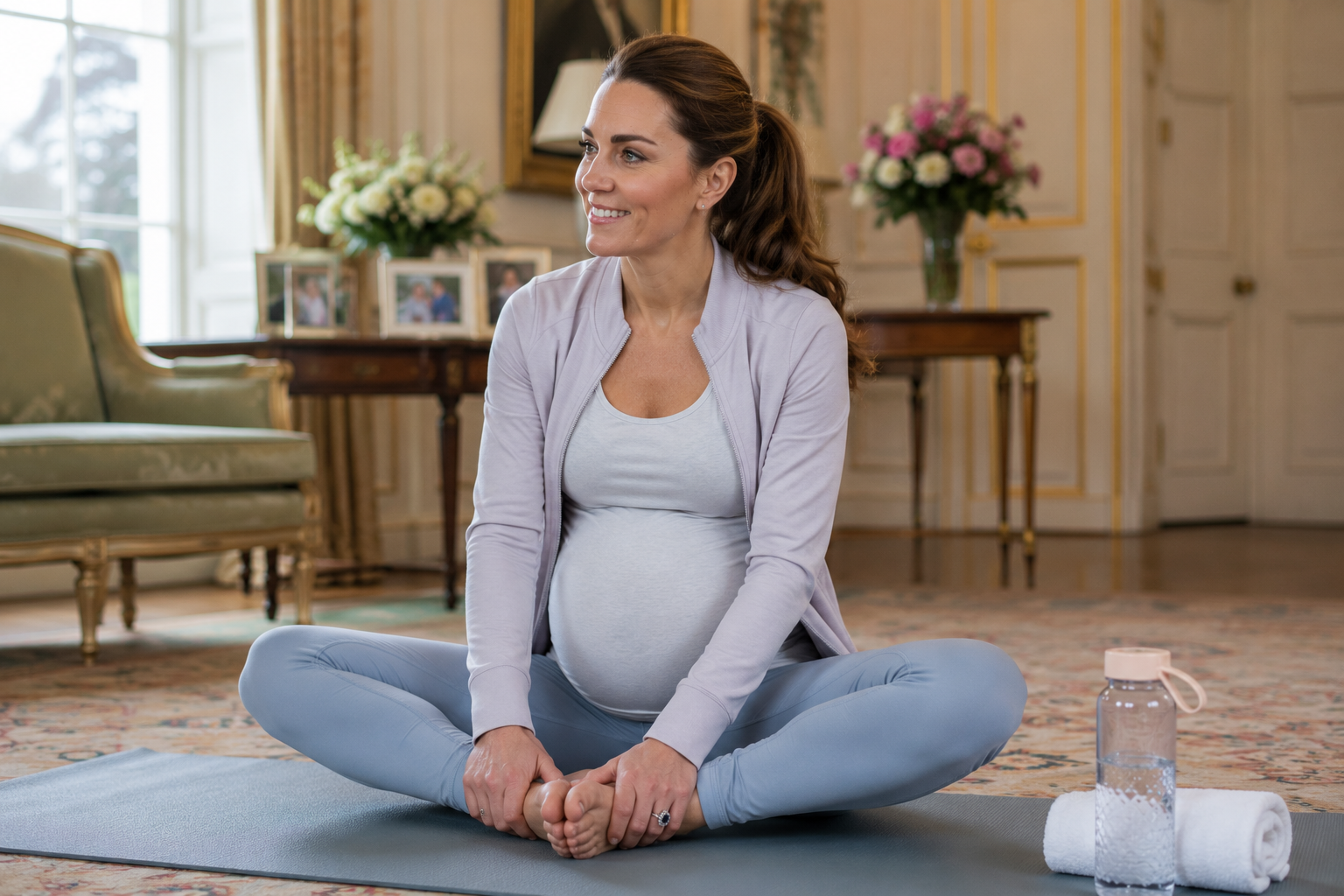
Pregnancy can bring major changes to everyday life, but for a member of the British Royal Family, those changes can happen alongside an unusually demanding public schedule. Kate Middleton’s pregnancies attracted worldwide attention, not only because of the royal babies she and Prince William were expecting, but also because pregnancy sometimes affected her ability to carry out official engagements.
 Kate Middleton, now known as the Princess of Wales, has spent years carrying out public duties, supporting charitable organizations, attending official events, and representing the Royal Family. The official Royal Family biography of the Princess of Wales explains that she has undertaken royal duties in the United Kingdom and overseas while developing a charitable portfolio focused heavily on children and families.
Her pregnancy experiences provide an interesting look at the intersection between royal responsibilities, motherhood, health, and public expectations. For readers of Pregnant Kate’s Royal Baby coverage, this is a different way to explore Kate’s pregnancy story without relying on speculation about future royal babies or unconfirmed private details.
It is important to distinguish between what is publicly documented and what remains private. There is no complete public record of Kate Middleton’s personal pregnancy routine, and assumptions about what she did every day should be treated carefully. What is documented, however, is that her pregnancies sometimes affected her official schedule and that the Royal Family publicly acknowledged her health difficulties during pregnancy.
Kate Middleton’s Royal Role During Her Pregnancies
Kate became a member of the Royal Family when she married Prince William in 2011. Since then, her public role has included charitable work, official visits, community engagements, and appearances connected to causes important to her.
The official Royal Family website explains that members of the Royal Family work together to support the monarch in official duties. This provides important context for understanding why royal pregnancies can attract so much attention. Pregnancy does not simply happen away from work for a working member of the Royal Family. Public responsibilities, scheduled engagements, and charitable commitments can all be affected by health and family circumstances.
Kate’s public role has also evolved over time. The official Royal Family biography notes her work surrounding early childhood development, children’s wellbeing, mental health, and family-related causes. That means motherhood and children’s issues have also become closely connected with the causes she supports publicly.
Kate’s First Pregnancy and the Arrival of Prince George
Kate and William announced that they were expecting their first child in December 2012. The pregnancy quickly became a major international story, with royal watchers following every public appearance and official announcement.
The birth of Prince George in July 2013 marked a significant moment for the couple and the Royal Family. After becoming parents, William and Kate continued to develop their public roles while also establishing their family life.
The experience of becoming parents for the first time was particularly important because it created a new balance between royal responsibilities and family life. Later pregnancies would take place with Kate already having experience as a mother and with the couple’s public responsibilities continuing to grow.
Readers interested in the broader royal-baby story can continue with Pregnant Kate’s Royal Baby category, where the focus can move from Kate’s public duties during pregnancy to the wider story surrounding the royal children.
Hyperemesis Gravidarum During Kate’s Second Pregnancy
One of the clearest examples of pregnancy affecting Kate’s royal schedule came during her second pregnancy. In September 2014, the Royal Family officially announced that the Duke and Duchess of Cambridge were expecting their second child.
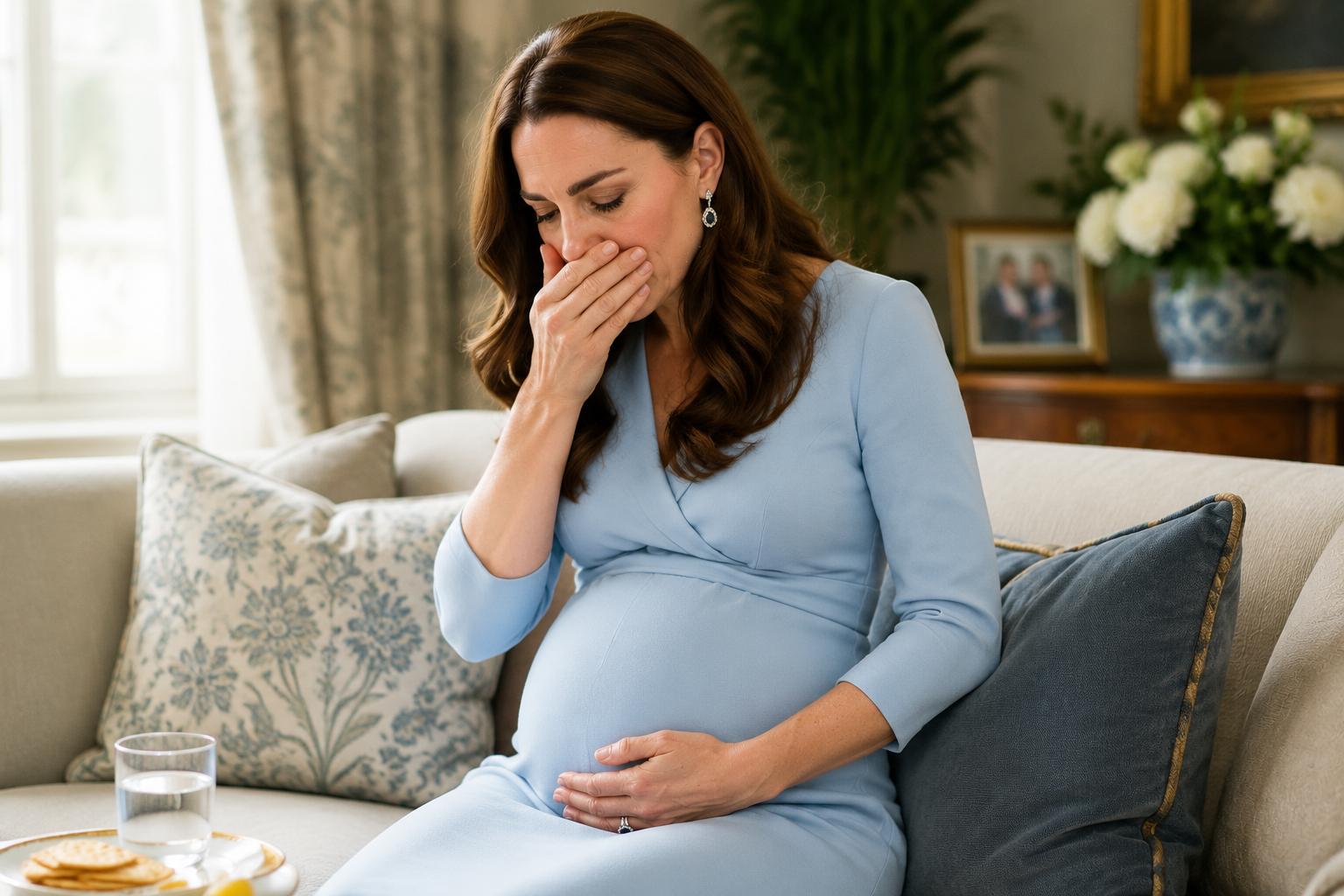
The official announcement stated that Kate was suffering from hyperemesis gravidarum during her second pregnancy. The announcement also said that she would not accompany Prince William on a planned engagement in Oxford that day and that she was being treated by doctors at Kensington Palace.
Hyperemesis gravidarum is more severe than typical pregnancy nausea and vomiting. The Royal Family’s announcement described it as very acute morning sickness, while medical organizations provide additional information about the condition and treatment options.
The American College of Obstetricians and Gynecologists explains that nausea and vomiting are common during pregnancy, but more serious symptoms can require medical treatment. The NHS also provides guidance on morning sickness and severe pregnancy sickness.
How Pregnancy Can Change a Public Schedule
Kate’s second pregnancy demonstrates an important reality of pregnancy: even someone with a carefully planned schedule may need to cancel or change commitments when health requires it.
Royal engagements are generally planned in advance, but the needs of the person carrying out the engagement still matter. Kate’s withdrawal from the Oxford engagement showed that a pregnancy-related medical issue could take priority over an official commitment.
For many expecting mothers, this is a relatable part of pregnancy despite the very different circumstances. A woman may have work meetings, family commitments, social events, appointments, or travel plans, yet pregnancy symptoms can sometimes require those plans to change.
The story also reinforces why pregnancy should not be measured by appearances. A polished public appearance does not necessarily reveal how someone feels privately. Kate may have appeared composed at many public events, but the official record shows that her pregnancies could also involve significant health challenges.
Kate’s Third Pregnancy Brought Similar Challenges
Kate experienced hyperemesis gravidarum again during her third pregnancy. In September 2017, the Royal Family announced that William and Kate were expecting their third child.
The official third-pregnancy announcement stated that Kate was suffering from hyperemesis gravidarum, as she had during her previous two pregnancies. It also explained that she would not carry out a planned engagement at the Hornsey Road Children’s Centre in London that day and was being cared for at Kensington Palace.
This is one of the most useful documented details when discussing Kate Middleton’s royal duties during pregnancy because it demonstrates that the issue was not simply a matter of royal fashion or public appearances. Her pregnancy affected her ability to perform scheduled engagements, and the Royal Family publicly acknowledged that health needs had to take priority.
Public Appearances During Pregnancy
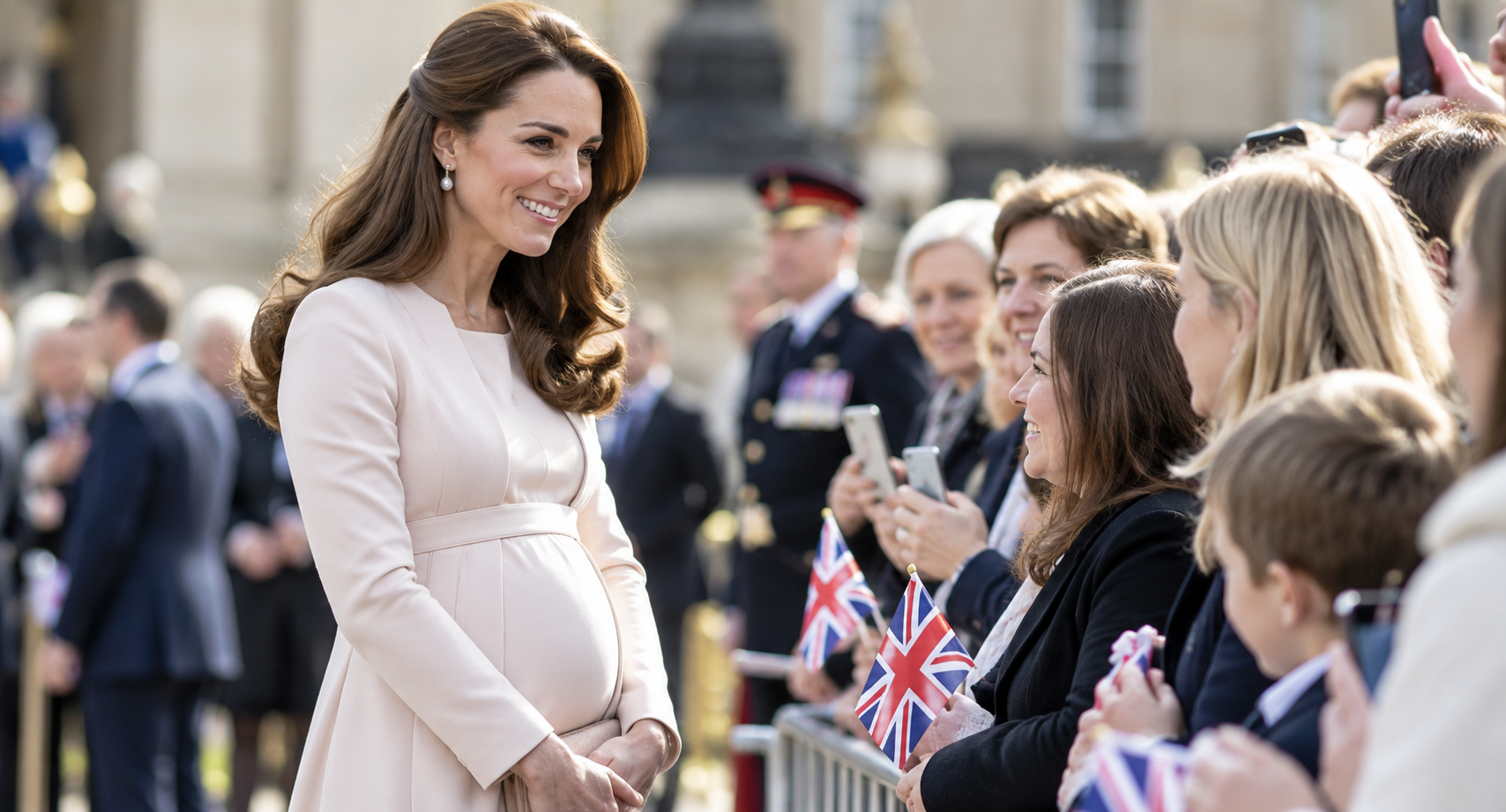
 When Kate did appear publicly during pregnancy, attention often focused on her clothing, body language, and interactions with members of the public. Her maternity looks became a major part of royal fashion coverage, while her public appearances generated photographs and news reports around the world.
For readers interested specifically in Kate’s clothing choices, the Kate’s Fashion section on Pregnant Kate provides a natural continuation of this topic. However, her maternity style is only one part of the story.
Royal engagements can involve meeting families, speaking with charity representatives, visiting community organizations, attending ceremonies, and participating in events connected with specific causes. During pregnancy, these appearances also took place under intense public scrutiny.
That combination makes Kate’s pregnancy experience different from an ordinary pregnancy in one important respect: even routine public appearances can become international news.
Balancing Pregnancy With Public Responsibilities
Balancing pregnancy with professional responsibilities is a challenge that many women understand, even if their circumstances are very different from Kate’s. Pregnancy can affect energy, mobility, sleep, concentration, and comfort. Some women may need to reduce their schedules, while others continue working with adjustments.
Kate’s public record shows an important principle: royal responsibilities can be adapted when health circumstances require it. The Royal Family’s public announcements did not present missed engagements as unusual or controversial. Instead, they communicated that Kate was receiving medical care and that planned appearances would change.
This approach also offers a useful distinction between responsibility and overexertion. Being committed to work does not mean ignoring health needs. Pregnancy can require flexibility, and that flexibility can be especially important when symptoms are severe.
Motherhood Became Part of Kate’s Public Story
After Prince George was born, Kate’s public identity increasingly included her role as a mother. The arrival of Princess Charlotte in 2015 and Prince Louis in 2018 expanded the family further.
The official Royal Family biography of Prince William confirms that William and Kate have three children: Prince George, Princess Charlotte, and Prince Louis. The family continues to undertake official duties while also maintaining family life away from the public eye.
For royal watchers, this creates an interesting connection between pregnancy stories and later family appearances. A pregnancy announcement is not simply the beginning of a news cycle. It becomes part of a much longer story about the child’s arrival, early years, education, and eventual place within the family.
This is also why articles about Kate’s pregnancy can naturally connect with your earlier article about how Prince William supported Kate Middleton during pregnancy. The two subjects approach pregnancy from different perspectives: one focuses on partnership, while this article focuses on public responsibilities and scheduling.
The Difference Between Public Information and Private Life
One of the most important considerations when writing about a public figure’s pregnancy is respecting the difference between documented information and speculation. Royal fans naturally want to know what happens behind the scenes, but not every private detail is publicly available.
For example, it would be inappropriate to state exactly what Kate ate every morning, how many hours she exercised, or how she felt on a particular day unless those details were publicly documented. Instead, reliable coverage should focus on official announcements, confirmed appearances, and information released by reputable sources.
This approach makes royal pregnancy content more useful as well as more trustworthy. It allows readers to learn about what actually happened while still enjoying the human-interest element of the story.
Why Kate’s Pregnancy Appearances Continue to Attract Attention
Royal pregnancy stories remain popular because they combine several subjects that naturally attract readers: family, motherhood, fashion, health, tradition, and public life.
Kate’s pregnancies also occurred during a period when social media and digital publishing made photographs and royal updates available almost instantly. A single appearance could generate discussion about her outfit, her schedule, the baby, her family, and her future responsibilities.
That continuing interest makes the subject a natural fit for Pregnant Kate’s broader blog coverage. It also creates opportunities to connect readers between royal news, family stories, pregnancy information, and Kate’s fashion coverage without repeating the same topic.
What Expecting Mothers Can Take From the Story
Kate Middleton’s pregnancy experiences should not be treated as a template for how every pregnancy should look. Pregnancy varies considerably from person to person, and medical advice should always be individualized.
There is, however, a broader lesson in the public record. Pregnancy can require flexibility. A person may have important responsibilities and still need to change plans when symptoms become difficult. Asking for help, attending medical appointments, resting when necessary, and adjusting expectations can all be reasonable parts of pregnancy.
For women who are experiencing significant nausea or vomiting, professional medical advice is particularly important. The NHS pregnancy guidance explains when morning sickness may require additional attention, while ACOG provides information about available treatment options.
Kate Middleton’s Pregnancy Story in Perspective
Kate Middleton’s royal duties during pregnancy show that public responsibility and personal health can sometimes collide. Her pregnancies were closely followed around the world, but official announcements also made clear that health concerns could change her schedule.
Her experiences with hyperemesis gravidarum during multiple pregnancies are among the most clearly documented aspects of her pregnancy story. Rather than suggesting that Kate followed a perfect pregnancy routine, the public record shows something more realistic: pregnancy sometimes required medical care, cancelled engagements, and changes to planned responsibilities.
That perspective makes her story particularly interesting. Behind the formal photographs, elegant maternity clothing, and royal engagements was a pregnancy experience that included many of the same uncertainties and adjustments that other expecting mothers can face.
For readers who want to continue exploring the royal family, your Royal Baby category provides related stories, while Kate’s Fashion offers a closer look at the style side of her public appearances.
Final Thoughts
Kate Middleton’s pregnancies offer a fascinating look at what happens when pregnancy takes place alongside a highly visible public role. Her official royal record shows that pregnancy-related health issues sometimes required her to step back from scheduled engagements, while other public appearances became important moments in the story of her growing family.
The key takeaway is not that Kate had a perfect way of balancing pregnancy and royal life. Instead, her documented experience shows the importance of flexibility. Even someone with major public responsibilities may need to change plans, receive medical care, and prioritize health during pregnancy.
That makes Kate’s pregnancy story more relatable than it might initially appear. Whether someone is a member of the Royal Family or preparing for a baby while working an ordinary job, pregnancy can require patience, planning, and the willingness to adjust when circumstances change.
For more royal pregnancy stories, readers can continue exploring Royal Baby updates, revisit Royal Baby Watch, or read about Prince William’s support for Kate during pregnancy.